
In the high-octane world of motorsports, the significance of quick and efficient repairs cannot be overstated. Every second counts on the racetrack, and a well-timed pit stop can mean the difference between victory and defeat. When a vehicle experiences mechanical issues or damage during a race, the ability to address these problems swiftly is crucial.
Not only does it allow the driver to return to the race with minimal time lost, but it also maintains the momentum of the team’s overall strategy. We understand that in racing, every moment is precious, and a delay can lead to missed opportunities and lost positions. Moreover, quick repairs are essential for maintaining the safety of the driver and the integrity of the vehicle.
A malfunctioning part can pose serious risks, not just to the driver but also to other competitors on the track. By ensuring that repairs are conducted efficiently, we contribute to a safer racing environment. The pressure to perform under such circumstances is immense, but it is this very challenge that drives teams to refine their processes and enhance their skills.
In essence, quick and efficient repairs are not merely about speed; they are about precision, safety, and strategic advantage.
- Quick and efficient repairs are crucial in pit stops to minimize time off the track
- Pit stop repairs require a well-coordinated team and specialized tools and techniques
- Teamwork is essential for successful pit stop repairs, with each member having a specific role
- Time constraints add pressure to pit stop repairs, requiring teams to work quickly and accurately
- Training and preparation are key for pit stop repairs, with teams constantly evolving their techniques and technology
Behind the Scenes of a Pit Stop
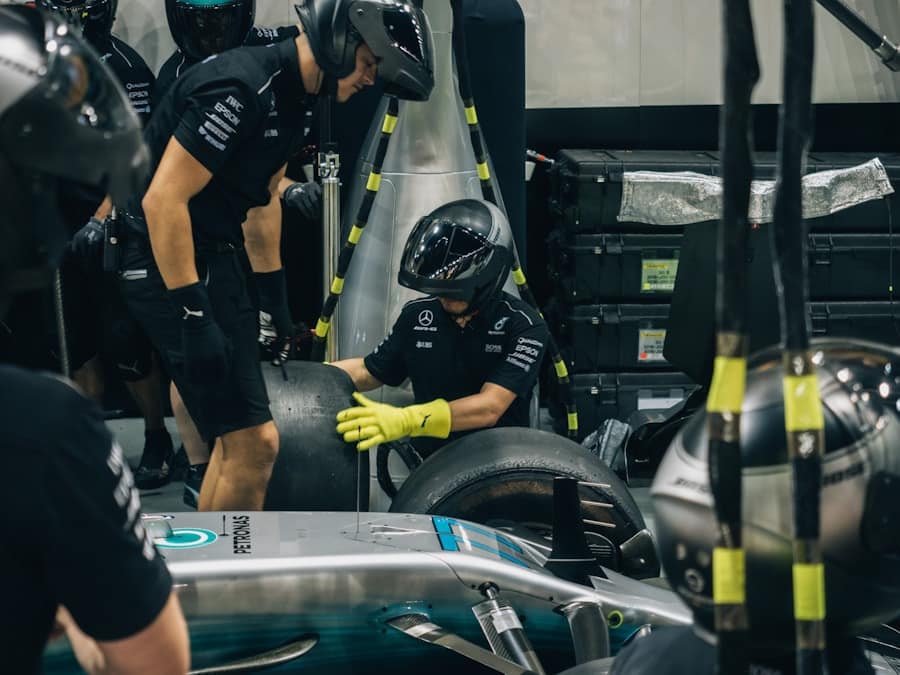
When we think of a pit stop, our minds often conjure images of tire changes and fuel refills, but there is so much more that happens behind the scenes. The pit crew operates like a well-oiled machine, each member playing a specific role that contributes to the overall success of the stop. From the moment the car pulls into the pit box, a flurry of activity ensues.
We have tire changers ready to swap out worn tires for fresh ones, fuelers poised to replenish the tank, and mechanics on standby to address any unforeseen issues. This choreography of movement is meticulously practiced and honed over countless hours. The organization and communication within the pit crew are paramount.
Each member must be acutely aware of their responsibilities while also being attuned to the actions of their teammates. We often rely on hand signals and verbal cues to ensure that everyone is synchronized during the high-pressure moments of a pit stop. The atmosphere is electric, filled with urgency and focus as we work together to execute our tasks flawlessly.
It is this behind-the-scenes coordination that allows us to achieve remarkable turnaround times, often completing complex repairs in mere seconds.
Tools and Techniques for Fast Repairs

To facilitate rapid repairs during a pit stop, we utilize an array of specialized tools and techniques designed for efficiency and effectiveness. High-speed impact wrenches are among our most essential tools, allowing us to remove and replace tires in record time. These powerful devices are engineered for speed, enabling us to make quick adjustments without compromising safety or precision.
Additionally, we employ various jacks and lifting systems that allow us to elevate vehicles swiftly, ensuring that we can access critical components without delay. Beyond tools, our techniques play a vital role in expediting repairs. We have developed standardized procedures for common tasks, such as tire changes or brake adjustments, which streamline our efforts during a pit stop.
Each crew member is trained to perform their tasks with precision and speed, minimizing downtime. Furthermore, we continuously analyze our performance after each race, identifying areas for improvement and refining our techniques accordingly. This commitment to innovation ensures that we remain at the forefront of pit stop efficiency.
The Role of Teamwork in Pit Stop Repairs
Teamwork is the backbone of any successful pit stop operation. Each member of the crew brings unique skills and expertise to the table, and it is through collaboration that we achieve our goals. We understand that no single individual can carry out a pit stop alone; it requires seamless coordination and mutual trust among all team members.
This camaraderie fosters an environment where everyone feels empowered to communicate openly and support one another during high-pressure situations. Moreover, effective teamwork extends beyond just executing tasks; it involves strategic planning and decision-making as well. Before each race, we gather to discuss potential scenarios and develop contingency plans for various situations that may arise during a pit stop.
This proactive approach ensures that we are prepared for anything, allowing us to adapt quickly if unexpected challenges occur. Ultimately, it is our collective effort that enables us to perform at our best when it matters most.
The Pressure of Time Constraints
The pressure of time constraints during a pit stop is palpable. With the clock ticking down, every second feels like an eternity as we race against time to complete our tasks. The stakes are incredibly high; a slow pit stop can result in lost positions on the track or even jeopardize our chances of winning the race.
This urgency creates an intense atmosphere where focus and precision are paramount. We thrive under this pressure, channeling our adrenaline into swift actions that can make or break our performance. To manage this pressure effectively, we rely on rigorous training and preparation.
Each member of the crew practices their roles repeatedly until they become second nature. This repetition builds muscle memory, allowing us to execute tasks with speed and accuracy even when adrenaline levels are high. Additionally, we cultivate a mindset that embraces challenges rather than shying away from them.
By fostering resilience within our team, we ensure that we can maintain composure under pressure and deliver exceptional results when it counts.
Common Pit Stop Repairs and Solutions
Tire Changes: A Crucial Aspect of Racing
Throughout a race, various issues may arise that necessitate quick repairs during a pit stop. Tire wear is an inevitable part of racing; as drivers push their vehicles to the limit, tires can become compromised or damaged. Our crew is trained to assess tire conditions rapidly and make informed decisions about when to change them for optimal performance.
Brake Adjustments: Ensuring Safety on the Track
Brake issues are another frequent concern during races. Overheating or wear can lead to decreased braking efficiency, which poses significant risks on the track. We have developed techniques for quickly inspecting brake systems and making necessary adjustments or replacements as needed.
Minor Bodywork Repairs: Getting Back on Track
Minor bodywork repairs may be required if a vehicle sustains damage from contact with other cars or debris on the track. Our team is equipped with tools to address these issues swiftly, ensuring that drivers can return to racing with confidence.
Training and Preparation for Pit Stop Repairs
Training and preparation are fundamental components of our success in executing fast repairs during pit stops. We dedicate countless hours to practice sessions where we simulate various scenarios that may occur during a race. These drills allow us to refine our techniques, improve communication, and build camaraderie among team members.
Each practice session is an opportunity for us to identify weaknesses and develop strategies for improvement. In addition to hands-on training, we also engage in theoretical learning about vehicle mechanics and repair techniques. Understanding how each component functions enables us to diagnose issues more effectively during races.
We often analyze footage from previous races to evaluate our performance during pit stops, identifying areas where we can enhance efficiency or accuracy. This commitment to continuous learning ensures that we remain adaptable in an ever-evolving sport.
The Evolution of Pit Stop Technology
As technology continues to advance, so too does the landscape of pit stop operations in motorsports. Over the years, we have witnessed remarkable innovations that have transformed how repairs are conducted during races. From automated tire changers to advanced telemetry systems that monitor vehicle performance in real-time, these technological advancements have significantly improved our efficiency and effectiveness.
One notable evolution has been in communication technology. With the advent of wireless communication systems, we can now relay information between team members more effectively than ever before. This allows us to make quick decisions based on real-time data from the car while it is still on track.
Additionally, advancements in materials science have led to lighter yet stronger components being used in vehicles, reducing wear and tear during races and minimizing the need for extensive repairs during pit stops. In conclusion, quick and efficient repairs during pit stops are vital in motorsports, impacting both safety and performance on the track. Behind every successful pit stop lies a well-coordinated team equipped with specialized tools and techniques designed for speed and precision.
As we continue to evolve through training and technological advancements, we remain committed to pushing the boundaries of what is possible in pit stop operations while embracing the challenges that come with this exhilarating sport.
If you enjoyed reading about quick and efficient repairs in “The Pit Stop Diaries,” you may also be interested in learning about advanced techniques for rust repair in vehicles. This article explores restoring your vehicle from the inside out and provides valuable insights into maintaining the integrity of your car’s body. Check out